
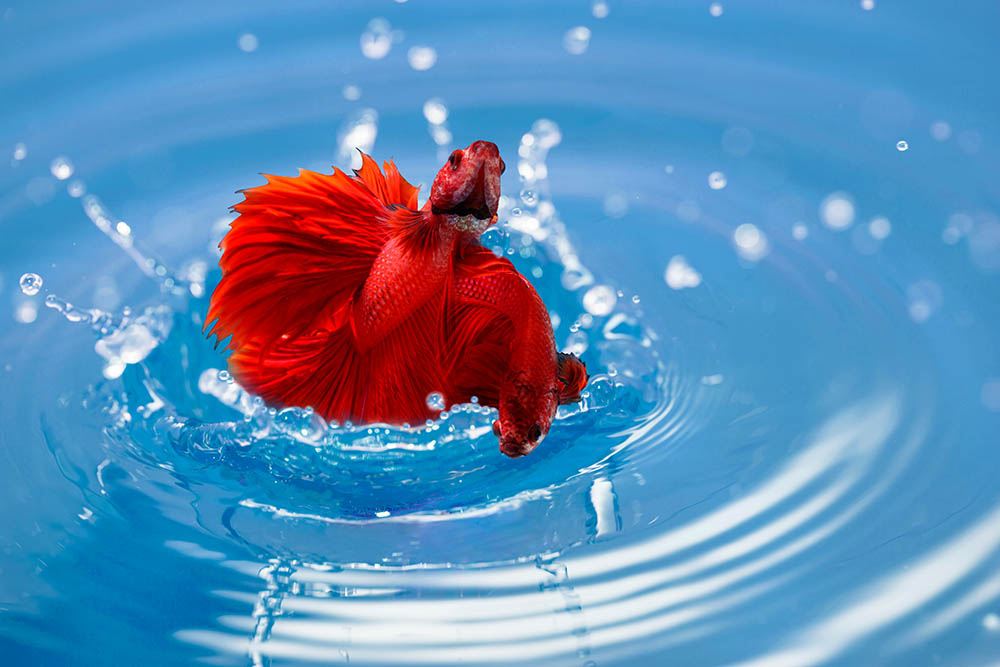
Image Source: www.hepper.com
How Long Can A Betta Fish Live Without Water? The Truth
Can a betta fish live without water? No, a betta fish cannot live without water for any significant amount of time. While they possess a labyrinth organ that allows them to breathe atmospheric air, this adaptation doesn’t make them capable of surviving outside of an aquatic environment.
This is a critical question for any betta fish owner, and the answer is a stark one: very, very little time. The notion that bettas are somehow immune to the need for water is a dangerous misconception, often stemming from their ability to gulp air from the surface. This unique adaptation, their labyrinth organ, does indeed allow them to supplement their gill respiration with atmospheric oxygen, but it is far from a ticket to land-based survival. In fact, prolonged exposure to air is incredibly detrimental to their health and will lead to a swift and agonizing demise.
The Betta’s Unique Breathing Mechanism
Betta fish, scientifically known as Betta splendens, are native to the shallow, oxygen-poor waters of Southeast Asia. In their natural habitat, the water often becomes stagnant, especially during dry seasons. To cope with this scarcity of dissolved oxygen, bettas evolved a remarkable feature: the labyrinth organ.
Fathoming the Labyrinth Organ
The labyrinth is a specialized bony structure located in the supra-branchial cavity, above the gills. It’s essentially a modified gill arch. Here’s how it works:
- Air Gulping: When oxygen levels in the water are low, a betta will swim to the surface and gulp air.
- Oxygen Extraction: This air is then directed into the labyrinth organ. The organ is rich in blood vessels and has a large surface area, allowing the fish to extract oxygen directly from the air into its bloodstream.
- Supplementing Gill Respiration: The labyrinth organ acts as a “lung,” supplementing the oxygen they receive from their gills, which extract dissolved oxygen from the water.
This ability is what gives betta fish their survival advantage in their natural, often challenging, environment. It’s why they are often referred to as “Siamese fighting fish.”
Betta Fish Survival: The Limits of Air Breathing
Despite their ability to breathe air, betta fish are still fundamentally aquatic creatures. Their bodies are designed for life in water, and they cannot survive without it.
The Impact of a Fish Out of Water
When a betta fish is removed from its water, several critical things happen that quickly lead to its demise:
- Gill Collapse: The gills, which are the primary organs for extracting oxygen from water, are delicate and require water to remain functional. In the air, the gill filaments collapse and stick together. This drastically reduces the surface area available for gas exchange, even if there were oxygen present.
- Dehydration: Like any living organism, betta fish lose moisture. Without water to replenish this loss, they will dehydrate rapidly. Their scales and skin are not designed to retain moisture in dry air.
- Suffocation: While the labyrinth organ can take in air, it’s not a substitute for being submerged. The air needs to be moist for efficient transfer. In dry air, the labyrinth organ also struggles to function effectively. Furthermore, the delicate membranes within the labyrinth organ can dry out and become damaged.
- Stress: Being pulled from their environment and exposed to air is incredibly stressful for a betta fish. This stress can weaken their already compromised systems and accelerate their decline.
How Long Can a Betta Fish Truly Last Without Water?
The answer is: mere minutes.
In practical terms, if a betta fish is out of water for more than a few minutes, its chances of survival become extremely slim, and the long-term health effects can be severe even if it’s revived.
Let’s break down the likely timeline:
- 30 seconds to 1 minute: The fish will likely be gasping and thrashing, trying to reach the surface for air, even though it’s already out of water. Its gills will be starting to collapse.
- 1 to 2 minutes: The fish may become lethargic, its movements will be erratic and uncoordinated. Its body will begin to dry out.
- 2 to 5 minutes: The fish will likely be unresponsive, its body limp. Without immediate return to water, irreversible damage is occurring, and death is imminent.
It is crucial to emphasize that these are estimates, and factors like humidity, temperature, and the fish’s individual health can slightly influence this timeframe, but never significantly extend it.
Betta Fish Oxygen Needs and Aquatic Life Without Water
The concept of “fish air breathing” is key here. Betta fish can breathe air, but this doesn’t mean they can live on air. It’s a survival mechanism for low-oxygen water, not a replacement for water itself.
The Limitations of Aquatic Animal Survival Out of Water
All aquatic animals, including betta fish, are adapted to live in a specific environment. Their physiology is intricately linked to the properties of water.
- Dissolved Oxygen: Fish gills are designed to extract dissolved oxygen from water. The water provides the medium through which oxygen molecules can easily diffuse into the blood.
- Moisture: The aquatic environment keeps their delicate gill tissues moist and functional.
- Buoyancy and Support: Water provides buoyancy, supporting their body weight and allowing for efficient movement. On land, their organs can be crushed by their own weight.
- Waste Removal: Water helps in the removal of metabolic waste products.
When these conditions are removed, the entire biological system begins to shut down.
Can Other Fish Breathe Air?
While bettas are famous for their labyrinth organ, other fish species have also evolved ways to breathe atmospheric air, albeit through different mechanisms. Some examples include:
- Lungfish: These fish have actual lungs and can survive prolonged periods of drought by burrowing in mud and breathing air.
- Gouramis and Anabantoids: Many fish in the anabantoid family, like bettas, possess a labyrinth organ.
- Catfish: Some catfish species can gulp air and absorb oxygen through specialized tissues in their mouths or intestines.
However, even these fish have limits. They are still fundamentally aquatic and require water for survival. Their air-breathing capabilities are adaptations to specific environmental challenges, not an indication that they can thrive out of water.
Preventing the Unthinkable: Fish Tank Water Loss
Understanding how quickly a betta fish can perish without water highlights the paramount importance of maintaining a stable aquatic environment for them. Accidents can happen, and being prepared is vital.
Common Scenarios Leading to Fish Out of Water:
- Accidental Tank Knock-Overs: A bumped tank can spill water, leaving fish exposed.
- Equipment Malfunctions: A filter failure that stops water circulation can lead to rapid depletion of dissolved oxygen, forcing fish to the surface and making them vulnerable if they are then exposed to air.
- During Tank Maintenance: While cleaning or transferring a betta, it’s easy for them to be exposed to air for too long if not handled carefully.
- Improper Transportation: Moving a betta without a proper water-filled container is a death sentence.
Essential Precautions for Betta Owners:
- Secure Tank Placement: Ensure the aquarium is placed on a stable surface, away from high-traffic areas where it might be accidentally knocked over.
- Reliable Filtration and Aeration: Maintain a healthy water environment with proper filtration. While bettas don’t strictly need an air stone (they breathe air), good water circulation helps with oxygen distribution and waste removal.
- Careful Handling During Maintenance: When performing water changes or cleaning, always use a proper container with tank water to temporarily house your betta if it needs to be removed from the main tank. Never leave it exposed to air.
- Safe Transportation: Always transport bettas in a sealed plastic bag or container filled with their original tank water.
- Emergency Preparedness: Keep a small, temporary container with conditioned water readily available, in case of unexpected emergencies.
Betta Fish Stress and Its Connection to Water Exposure
Exposure to air is not just physically harmful; it’s also incredibly stressful for a betta fish.
Fathoming Betta Fish Stress
Betta fish are known for their intelligence and sensitivity. Being removed from their familiar environment and exposed to air triggers a severe stress response.
- Physiological Stress: Their body releases stress hormones like cortisol. This can disrupt their immune system, making them more susceptible to diseases.
- Behavioral Changes: The initial thrashing and gasping are outward signs of extreme distress. Lethargy and lack of responsiveness are also indicators of shock.
- Long-Term Effects: Even if a betta is revived after a brief period out of water, the trauma can weaken it. They might become more reclusive, less active, and more prone to illness in the following days and weeks. This is part of why betta fish survival rates can be poor if they experience such trauma.
The Vicious Cycle of Stress and Health
When a betta fish is stressed, its already compromised ability to cope with a lack of water is worsened. The stress itself can tax their system, making them less resilient. For a fish with a labyrinth organ, the instinct to gulp air becomes a desperate, but ultimately futile, act when the water is gone. This desperation, coupled with the physical inability to breathe effectively in air, creates a potent cocktail of physiological breakdown.
Betta Fish Respiration: A Delicate Balance
The intricate process of betta fish respiration is a testament to adaptation, but it also highlights their dependency on water.
Interpreting Betta Fish Oxygen Needs
Betta fish need oxygen to survive, just like any other living creature. However, their oxygen needs are met through a dual system:
- Gills: These extract dissolved oxygen from the water. In well-oxygenated water, gills are sufficient.
- Labyrinth Organ: This supplements gill respiration by taking in atmospheric oxygen. This is a crucial backup system for when dissolved oxygen levels in the water are low.
However, the labyrinth organ is not a replacement for water. It requires moist air for efficient oxygen transfer, and the fish’s overall metabolic functions are optimized for an aquatic environment.
The Role of Water in Fish Respiration
Water is not just a source of oxygen for fish; it’s essential for the very mechanics of respiration:
- Moistening Gills: Water keeps the delicate gill filaments separated and moist, maximizing the surface area for oxygen diffusion.
- Dissolved Oxygen Transport: Water carries the dissolved oxygen to the gills.
- Moistening Labyrinth: Even the labyrinth organ functions best with moist air. Dry air can irritate and damage its sensitive tissues.
When a betta is removed from water, both its primary (gills) and secondary (labyrinth) respiratory systems are compromised.
Amphibious Fish vs. Betta Fish: A Misconception
The idea of “amphibious fish” might lead some to believe that creatures like bettas can transition to land. However, it’s crucial to differentiate true amphibious abilities from adaptations for survival in challenging aquatic conditions.
Deciphering Amphibious Traits
True amphibious fish, like mudskippers, have evolved specific physical adaptations to spend time out of water. These include:
- Enlarged Pectoral Fins: Used for “walking” or supporting their body on land.
- Specialized Skin: Some can absorb oxygen through their skin.
- Modified Eyes: Positioned on top of their heads to see above the water.
- Moist Environments: They typically stay in very damp areas, like muddy shorelines, and often keep their gills wet.
Betta fish, while possessing a remarkable adaptation for breathing air, do not possess these broader amphibious traits. They cannot walk, their skin is not adapted for terrestrial life, and they cannot survive for extended periods in moist terrestrial environments. Their adaptation is solely for survival within their aquatic habitat when oxygen is scarce.
Conclusion: The Non-Negotiable Need for Water
In summary, a betta fish cannot live without water. Their survival time out of water is measured in minutes, and even then, severe damage and stress are inflicted. While their labyrinth organ is a fascinating evolutionary marvel that allows them to breathe atmospheric air, it does not enable them to survive on land. Betta fish are entirely dependent on their aquatic environment for respiration, hydration, and overall well-being. Respecting this fundamental need by providing a stable, water-filled environment is the most crucial aspect of responsible betta fish care.
Frequently Asked Questions (FAQ)
Q1: My betta fish jumped out of its tank. What should I do?
A: If you find your betta fish out of its tank, act immediately. Gently scoop it up using a soft net or your hand (if you can do so without causing further harm) and place it back into a container of dechlorinated, conditioned water of the correct temperature. Observe it closely. If it recovers and starts swimming normally, great. If it remains lethargic or shows signs of distress, ensure its main tank is clean and at the proper temperature, and consider adding a bit of aquarium salt (follow dosage instructions carefully) to aid in recovery.
Q2: Can betta fish survive in very shallow water?
A: Yes, betta fish can survive in relatively shallow water as long as it is clean, heated, and well-filtered. Their labyrinth organ allows them to breathe air from the surface even in shallow conditions. However, “shallow” is relative. They still need enough water to swim freely and for their gills to function. Very shallow water, especially if it heats up too quickly or becomes stagnant, can still be harmful. A general recommendation is at least 5 gallons for a single betta.
Q3: How long can a betta fish go without its filter?
A: A betta fish can survive for a short period without a filter as long as the water is still oxygenated and clean. However, filters are crucial for removing waste and maintaining healthy water parameters. Without a filter, waste will build up quickly, leading to toxic ammonia and nitrite levels, which are poisonous to fish. In such a situation, frequent partial water changes are essential to keep the fish alive.
Q4: My betta seems to be breathing heavily at the surface. Is this normal?
A: While bettas do gulp air from the surface, consistent heavy breathing right at the surface can indicate a problem. It might mean the dissolved oxygen levels in the water are low due to poor water quality, lack of filtration, or high temperatures. It could also be a sign of stress or illness. Ensure the water is clean, at the correct temperature (78-80°F or 25.5-26.5°C), and that there is adequate water circulation. If the behavior persists, consult with an aquatic veterinarian or experienced fish keeper.
Q5: Can a betta fish drown?
A: Yes, a betta fish can “drown” in a sense, by being unable to breathe effectively. While they can breathe air, if the air is too dry, or if their gills are damaged and their labyrinth organ is also compromised, they can suffocate. Essentially, they die from a lack of oxygen transfer into their bloodstream, regardless of whether the source is dissolved oxygen in water or atmospheric oxygen.